Top B2B Lead Generation Companies for SaaS and IT Services
Your sales team is talented. Your product solves real problems.
But your pipeline is hemorrhaging because you can’t generate enough qualified conversations with decision-makers who actually need your solution. Meanwhile, competitors using specialized B2B lead generation companies are booking 50 sales meetings while you struggle to schedule 5.
The problem isn’t your product. The problem is that most lead gen company operations run on volume metrics that create activity without revenue.
They deliver spreadsheets full of contacts that your team must research, qualify, and filter before any real selling begins. You end up paying for list generation while your sales team does the actual prospecting work.
The true cost per lead balloons when you factor in SDR hours spent qualifying dead ends.
What you need are B2B lead generation companies that understand your specific market, target your exact ICP, and deliver sales leads who arrive ready for genuine conversations. The right lead gen company will help businesses like yours book more qualified meetings in 2026 than you thought possible.
This guide provides the framework to find them.
What Do B2B Lead Generation Companies Do?
B2B lead generation companies execute the front-end prospecting work that fills your sales pipeline with qualified opportunities. Their responsibility is identifying, reaching, and qualifying prospect accounts and contacts who match your Ideal Customer Profile and demonstrating genuine buying signals.
Each campaign should target specific enterprise leads with messaging tailored to their industry and pain points.
The best lead gen providers handle multiple stages of the prospecting process. They build target lists using multiple data sources.
They execute outbound lead generation across channels including email, LinkedIn, phone, and SMS. They qualify sales leads through discovery conversations.
They handle appointment setting and schedule meetings with qualified leads and hand off only accounts ready for qualified sales engagement. Many sales development teams now use AI to automate outreach and improve targeting precision for enterprise leads.
The critical distinction lies in what “qualified” means. Low-quality prospecting defines qualified as anyone who responded to an email.
High-quality lead gen defines qualified as prospects with documented budget, timeline, authority, and fit. The difference in meeting-to-close conversion rates between these definitions is dramatic.
The Full Scope of Modern Lead Generation Services
Comprehensive B2B lead generation companies offer services beyond simple contact generation. Lead capture through optimized landing pages and forms.
Lead qualification through structured discovery conversations. Lead scoring to prioritize highest-potential opportunities.
Lead nurturing to maintain engagement with prospects not ready for immediate sales conversations. Demand generation to create market awareness and pull prospects into your funnel.
Even an inbound lead that comes through your website gets nurtured through the same rigorous qualification process.
True customer acquisition partners understand the entire B2B sales and marketing cycle, not just isolated tactics. They help businesses scale their pipeline generation without proportional headcount increases.
What Are the Benefits of Using a B2B Lead Generation Company?
The benefits extend beyond simple pipeline filling into fundamental business transformation in 2026.
Time-to-revenue accelerates because your sales team stops prospecting and starts selling immediately. The months required to build internal sales development capability compress to weeks of onboarding with an external partner.
Your revenue trajectory shifts from gradual to immediate. A business-to-business lead generation agency brings proven campaign processes and AI tools that would take your team months to develop independently.
Sales efficiency improves because every meeting comes pre-qualified. Your team arrives at calls prepared with context about prospect challenges, current initiatives, and expressed needs.
Discovery conversations focus on solution fit rather than basic qualification. The best prospecting providers deliver high-quality enterprise leads that your qualified sales team can convert efficiently.
Scaling becomes achievable without proportional headcount increases. Adding 100 qualified meetings monthly doesn’t require hiring and training three additional SDRs.
The external partner absorbs capacity scaling while your team focuses on closing. This outbound lead generation approach scales infinitely without proportional investment in internal resources.
AI-powered campaign automation makes this scaling increasingly affordable.
Market intelligence accumulates from continuous outreach. Your partner learns what messaging resonates, which objections arise most frequently, and which prospect characteristics indicate highest conversion probability.
This intelligence informs your product positioning and sales process refinement.
The Compound Effect on Business Performance
When qualified leads flow consistently, sales teams perform better psychologically. They stop experiencing the feast-or-famine cycle that burns out SDRs and damages morale.
Consistent pipeline creates consistent activity, which creates consistent results, which creates predictable revenue.
How Much Do B2B Lead Generation Services Cost?
Pricing models vary across the industry in 2026, and understanding these models is essential for accurate comparison.
Per-lead pricing charges a fixed amount for each lead delivered, typically ranging from $25-500 depending on lead quality and market complexity. This model offers predictable unit economics but incentivizes volume over quality.
Providers using this model face pressure to deliver counts regardless of actual qualification depth. Watch out: low cost per lead often masks high total investment when qualification fails.
Monthly retainer pricing provides dedicated resources for a fixed monthly fee, typically ranging from $5,000-50,000 depending on scope and team composition. This model aligns incentives better because providers aren’t paid per lead but per qualified outcomes.
Many sales development teams prefer this model because it enables longer-term optimization of your campaign.
Performance-based pricing ties compensation to actual results: meetings held, SQLs generated, or revenue influenced. This model offers highest alignment but requires strong tracking and attribution infrastructure.
Some providers offer hybrid approaches combining base fees with performance components. AI-enhanced reporting makes this model increasingly viable in 2026.
Calculating True Lead Generation Investment
Compare costs against qualified meeting metrics, not raw lead counts. If one provider charges $10,000 monthly and delivers 20 qualified meetings while another charges $15,000 and delivers 60 qualified meetings, the second provider costs less per qualified conversation despite higher nominal pricing.
This calculation transforms how smart buyers evaluate their cost per lead.
Factor in sales team productivity. A provider delivering higher-quality sales leads reduces cost-per-close by enabling your team to sell rather than prospect.
The fully-loaded cost of SDR time spent on unqualified outreach often exceeds the external provider cost for qualified meetings. When you generate leads efficiently, your team operates at peak capacity.
How Do I Choose the Best B2B Lead Generation Company for My Needs?
Selection criteria should mirror your sales process, not generic agency evaluation frameworks.
- Vertical Expertise , Look for demonstrated expertise in your exact industry; “all business-to-business companies” means expertise in none
- ICP Alignment , Share your ideal customer profile and evaluate whether their targeting approach matches your specific accounts
- Qualification Rigor , Ask what “qualified lead” means; quality providers include budget, timeline, and authority in their definition
- Track Record and References , Request three references from current clients in your industry and speak directly about results
- Reporting Depth , Sample reports should show reply rates, meeting conversions, and pipeline influence, not just lead counts
Vertical expertise matters more than industry breadth. A provider claiming to serve “all enterprise companies” can’t possibly understand the nuances of your specific market. Look for demonstrated expertise in your exact industry: healthcare, fintech, SaaS, manufacturing, or professional services.
Ask for case studies with specific metrics from companies like yours.
ICP alignment is non-negotiable. Share your Ideal Customer Profile definition and ask how the provider would target your specific accounts. Their response reveals whether they understand your market or will apply generic targeting frameworks.
Specific, detailed answers indicate expertise. Vague responses indicate boilerplate approaches.
AI-driven targeting shows up in their answer when they mention data sources and personalization at scale.
Qualification rigor must match your standards. Ask what “qualified lead” means to them. If their definition doesn’t include budget, timeline, and authority, you’ll receive contacts dressed up as leads.
The best lead gen providers have specific qualification criteria that match or exceed your internal standards.
Evaluating Track Record and References
Request three references from current clients in your industry with similar company sizes. Speak directly with those references about actual results, communication quality, and partnership value.
Ask specifically about reply rates, meeting conversion rates, and whether leads matched their ICP. Real references provide honest assessments that marketing materials can’t.
What Are the Key Factors to Consider When Selecting a Lead Generation Platform?
Beyond agency selection, platform technology choices affect prospecting outcomes significantly in 2026.
Data quality determines targeting accuracy. Platforms accessing stale or incomplete databases produce shallow personalization and high bounce rates. Evaluate data freshness, source diversity, and verification processes.
Quality pipeline generation requires quality data infrastructure.
Multi-channel capability enables coordinated outreach. Email-only campaign limit reach because decision-makers have varying channel preferences. The best platforms integrate email, LinkedIn, phone, and SMS with intelligent orchestration that prevents over-contacting prospects across channels.
Each campaign should use multiple channels to maximize reach and engagement with potential enterprise leads. AI powers this orchestration across channels to avoid the noise.
Analytics depth enables optimization. Surface metrics like lead counts reveal nothing about quality. Deep analytics showing reply rates, meeting conversions, pipeline influence, and revenue attribution enable continuous improvement.
Platforms without strong analytics leave optimization opportunities undiscovered. AI-enhanced attribution makes this analysis increasingly precise.
Integration capability determines workflow efficiency. Your prospecting platform must connect to your CRM, sales tools, and communication systems. Poor integration creates manual work that erodes efficiency gains from external sales development efforts.
Platform Versus Agency Decisions
Organizations must decide whether to purchase platforms and build internal capability or partner with agencies that provide platforms as part of service delivery. Platform-only approaches require technical capacity to configure and optimize systems.
:1.7;font-size:18px;”>Full-service agency approaches provide expertise but at higher cost and less internal capability development. The choice impacts how quickly your campaign achieves profitability.
What Are Some of the Top B2B Lead Generation Companies?
The market includes providers across the sophistication and specialization spectrum in 2026.
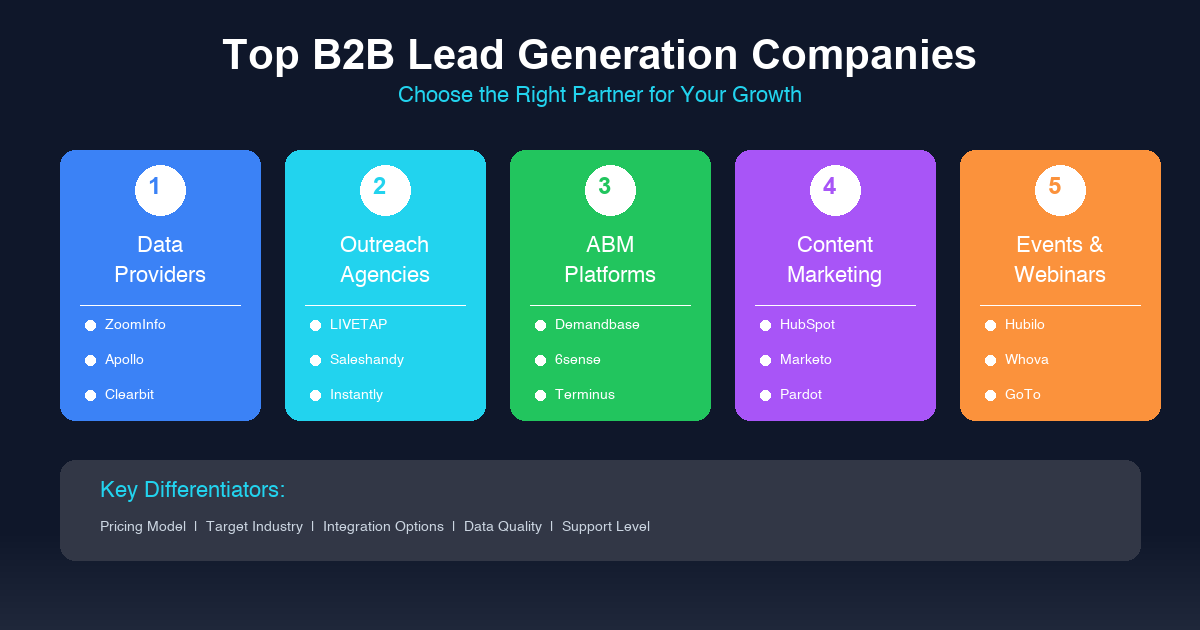
Full-service agencies like CIENCE, RocketReach, and Belkins offer comprehensive prospecting services with dedicated teams, multiple channel execution, and strategic oversight. These providers suit organizations seeking turnkey solutions without internal sales development capability.
Callbox is another example of a B2B lead generation agency that combines technology with human expertise to execute effective campaign workflows.
Specialized垂直 agencies focus on specific industries or company stages. Some providers specialize exclusively in SaaS lead generation, understanding the unique buying processes and decision-making structures of software companies.
Others focus on enterprise targeting or startup prospecting. These specialists help businesses like yours achieve superior results through focused expertise.
Technology-enabled providers use AI and automation to deliver higher volume and personalization than traditional agencies. These providers typically combine platform technology with human strategy and execution oversight.
When evaluating best lead generation companies, look for partners that incorporate AI throughout their campaign workflows to maximize efficiency and targeting accuracy.
Selecting the Right Category for Your Needs
Your selection depends on internal capability, budget constraints, and market complexity. Organizations with technical capacity and limited budgets may build internal operations using specialized platforms.
Organizations needing immediate results with predictable costs typically partner with established agencies. The right choice depends on your specific circumstances, not generic recommendations.
What Services Do B2B Lead Generation Companies Offer?
Comprehensive providers deliver services across the entire B2B marketing and sales spectrum.
- Prospect Research and List Building , Identifying target accounts using multiple data sources, not just scraped LinkedIn profiles
- Cold Outreach Execution , Handling initial contact through email, LinkedIn, phone, or SMS with personalized email content
- Lead Qualification , Confirming budget, timeline, authority, and fit through structured discovery conversations
- Appointment Setting , Booking qualified prospects onto your calendar with appropriate preparation and context
- Lead Nurturing , Maintaining engagement with prospects not ready for immediate sales conversations
- Strategic Services , Content creation, CRM configuration, analytics dashboards, and market research
Prospect research and list building involves identifying target accounts and contacts matching your ICP. Quality providers use multiple data sources to build lists with company and contact information, not just scraped LinkedIn profiles.
Your inbound pipeline benefits from this research foundation when integrated with your broader demand generation efforts. AI now accelerates this research dramatically.
Cold outreach execution handles initial contact through email, LinkedIn, phone, or SMS. Professional outreach includes message personalization based on prospect-specific research, not generic templates.
Each campaign should include clear handoff protocols to ensure your prospecting partner maintains consistent quality throughout the outreach process.
Lead qualification confirms whether prospects meet your criteria through structured discovery conversations. Qualification includes budget confirmation, timeline assessment, authority verification, and problem recognition.
Appointment setting happens after this rigorous qualification.
Meeting scheduling books qualified prospects onto your calendar with appropriate preparation. Your team arrives at calls knowing context and ready for substantive discovery.
Lead nurturing maintains engagement with prospects not yet ready for sales conversations. Nurturing sequences keep your solution top-of-mind until purchase timing emerges.
Additional Value-Add Services
Strategic sales development providers offer services beyond basic execution. Content creation for outreach sequences.
CRM configuration and optimization. Analytics dashboards and reporting.
Sales process consulting. Market research and competitive intelligence.
The best partnerships extend beyond tactical execution into strategic guidance. They help businesses optimize every campaign for maximum ROI.
What Questions Should I Ask a Lead Generation Company Before Hiring Them?
These questions separate professional providers from amateur operations.
“Walk me through your targeting process for a company like mine.” You want specifics: which data sources, which qualification criteria, which messaging approaches. Vague answers indicate they’ve not developed expertise in your market.
The best providers can detail how their campaign would target your specific ICP.
“What does ‘qualified lead’ mean to your team?” If they can’t articulate specific criteria around budget, timeline, and authority, you’ll receive unqualified contacts. In 2026, leading providers use AI to score and qualify leads at scale.
“what’s your average bounce rate, and how do you handle bounces?” Bounce rates above 3% indicate data quality problems. Above 5% signals serious issues that will damage your sender reputation.
Ask about their verification process for any outbound lead generation they conduct.
“Who actually executes the work?” Some agencies resell other vendors’ services. You want to know whether you receive the agency’s expertise or someone else’s offshore operation.
Appointment setting should be handled by trained professionals, not automated scripts.
“How do you personalize outreach at scale?” Generic templates aren’t personalization. Look for answers involving prospect-specific research, trigger identification, and message customization.
AI-driven personalization at scale separates elite providers from commodity vendors.
“What reporting do you provide?” Sample reports should show reply rates, meeting conversions, and pipeline influence, not just lead counts.
The Red Flags That Signal Problems
Guaranteed lead counts without understanding your market. Refusal to share case studies with specific metrics.
Vague answers about data sources and verification processes. Pricing significantly below market rates.
Minimum commitments without trial periods. These signals indicate providers you should avoid.
How Do Lead Generation Companies Ensure Lead Quality?
Quality assurance distinguishes elite providers from volume-focused operations.
Multi-source data verification confirms contact accuracy through redundant validation. Email addresses get validated through SMTP checks.
Phone numbers get tested through calling infrastructure. Job titles get confirmed against current organizational structures.
No single data source is trusted absolutely. AI now plays a significant role in this verification process.
Qualification conversations confirm buyer readiness before delivery. The best providers conduct actual discovery calls, not just email exchanges, before declaring a lead qualified.
These conversations verify budget, timeline, authority, and fit through direct dialogue. This rigorous appointment setting process ensures only qualified sales opportunities reach your team.
Lead scoring frameworks prioritize highest-potential opportunities. Scoring models incorporate multiple signals: company characteristics, contact seniority, engagement depth, and expressed need.
Sales teams receive leads sorted by conversion probability, not arrival time.
Continuous optimization improves quality over time based on feedback loops. When sales provides conversion data, providers adjust targeting and qualification criteria.
This closed-loop optimization compounds into increasingly accurate lead quality. Each campaign builds on learnings from the last.
The Metrics That Indicate Quality
Meeting-to-opportunity conversion rates reveal true lead quality. Below 30% suggests targeting or qualification problems.
Above 50% indicates excellent prospect selection. Request this metric from any provider you evaluate.
Most can’t share it because they don’t track post-handoff performance. Track your cost per lead and meeting-to-close rates together to understand true ROI.
what’s the Difference Between a Lead Generation Company and a Demand Generation Agency?
These terms are often confused but represent fundamentally different approaches.
Lead generation companies focus on identifying and qualifying existing demand. They target prospects who are already researching solutions and ready for sales conversations.
Their work generates sales leads for your pipeline to convert. They help businesses generate leads consistently through proven prospecting methods.
Demand generation agencies focus on creating new demand in markets that may not recognize their need for your solution. They build market awareness, generate interest, and nurture prospects through extended decision-making processes.
Their work creates markets for you to serve.
The choice depends on your market position. Established categories with existing buyers benefit from lead gen approaches targeting active researchers.
New categories or emerging needs require demand generation approaches that build awareness and educate markets. In 2026, the best sales development teams integrate both approaches into a cohesive pipeline generation strategy.
When You Need Both Approaches
Most B2B sales organizations need both simultaneously. Lead generation fills immediate pipeline needs with prospects showing current buying signals.
Demand generation builds market presence and future pipeline through content marketing, thought leadership, and brand building. The balance between these approaches shifts based on market maturity, competitive dynamics, and growth objectives.
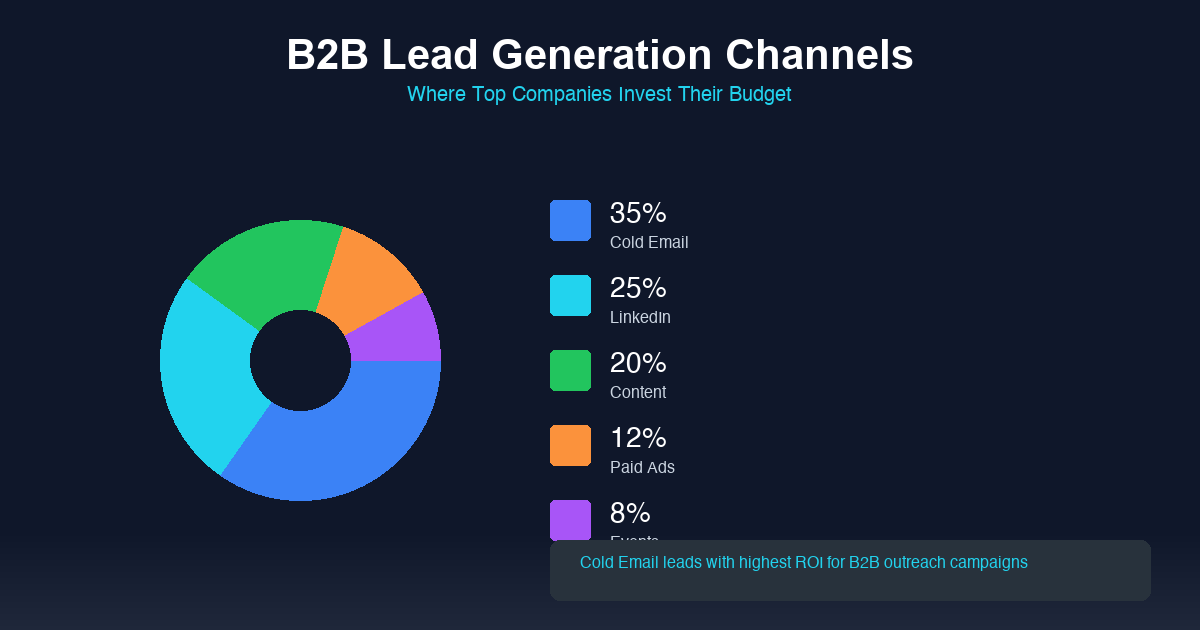
Do the math. If our AI infrastructure reaches out to 1,000 highly qualified, triple-verified decision-makers a day, that’s 30,000 people a month. With our hyper-personalization, even an impossibly conservative 1% reply rate yields 300 qualified conversations. In high-ticket B2B, what happens to your revenue when you’ve 300 conversations with your exact ICP? Each campaign compounds these results over time, building momentum that traditional prospecting can’t match.
Frequently Asked Questions
what’s the fastest way to use Top B2B Lead Generation Companies for SaaS and IT Services without burning the market?
Start with a tight ICP, verified data, and a small test batch. Scale only after replies, bounces, and meeting quality prove the message is working.
How many prospects should I contact for Top B2B Lead Generation Companies for SaaS and IT Services?
The number matters less than the fit. A smaller list of verified decision-makers will beat a large scraped list because inbox placement, relevance, and timing decide reply quality.
Why do most campaigns around Top B2B Lead Generation Companies for SaaS and IT Services fail?
Most campaigns fail because the data is weak, the offer is vague, and the follow-up system is inconsistent. Fix those three points before adding more volume.
Should I use email only for Top B2B Lead Generation Companies for SaaS and IT Services?
No. Email works better when it’s supported by LinkedIn touches, retargeting, and clean CRM follow-up. One channel creates reminders. Multiple channels create recognition.
When should I hire help for Top B2B Lead Generation Companies for SaaS and IT Services?
Hire help when you already know the customer profile, the offer is validated, and the bottleneck is execution speed. Outsourcing a broken offer only makes the failure happen faster.
The Revenue Team Version
Here is the part most teams miss with Top B2B Lead Generation Companies for SaaS and IT Services: the tactic is not the asset. The system around the tactic is the asset. That is why I care less about volume at the start and more about whether the first replies prove the angle is real.
A serious B2B buyer has one silent question: why should I care right now? If the campaign cannot answer that quickly, the rest of the copy does not matter. That means the message has to earn attention fast: clear pain, clean proof, and a next step that does not feel like a trap.
The Quality Gate
- ICP match: The buyer should match your best customer profile, not just a broad industry label.
- Trigger strength: A hiring move, new location, funding event, tech change, compliance push, or public initiative makes outreach feel timely.
- Follow-up logic: Every follow-up should add a new reason to respond. Repeating the first message is not follow-up. It is noise.
Do not hide behind volume. Volume is a multiplier. It multiplies good strategy, and it multiplies bad strategy even faster.
The cleaner version is simple: start with 300 accounts, not a giant scraped list. Segment them by pain, write one message for one segment, and watch replies before scaling. If that first batch does not produce signal, more volume will not save the campaign. It will only make the failure louder.
The hard truth: Top B2B Lead Generation Companies for SaaS and IT Services is not magic. It is a disciplined system for reaching the right buyer with the right proof at the right time. Build the data layer first, then the message, then the follow-up system. In that order.
Book a strategy call
How to Judge B2B Lead Generation Companies Before You Scale
The practical test for b2b lead generation companies is not whether the idea sounds smart. The test is whether it creates qualified pipeline without damaging deliverability, sender reputation, or buyer trust. A strong system connects lead generation agencies , b2b leads , lead generation partner , b2b companies with clear targeting, clean data, and a message that feels written for the exact account.
If the campaign uses top lead , top lead generation , generation companies in the usa , lead generation strategies , top lead generation companies , b2b lead gen, the team needs a simple operating rule: do not add volume until replies prove the angle. That means watching inbox placement, open rates, reply quality, bounce behavior, and the number of sales meetings that come from real decision-makers.
The Execution Checklist
- Infrastructure: Check b2b and b2c, quality leads, generation process, lead generation companies in 2026 before scaling. If this layer is weak, more sending only creates louder failure.
- Targeting: Check company in the usa, generation campaigns, right lead generation before scaling. If this layer is weak, more sending only creates louder failure.
- Message quality: Check top lead generation agencies, sales cycle, outbound sales, inbound lead generation before scaling. If this layer is weak, more sending only creates louder failure.
- Follow-up: Check hiring a lead generation agency, company offering, lead research before scaling. If this layer is weak, more sending only creates louder failure.
- Measurement: Check lead generation campaigns, lead generation companies provide before scaling. If this layer is weak, more sending only creates louder failure.
The bottom line is simple: b2b lead generation companies should be treated like a revenue system, not a one-off campaign. When the list, email infrastructure, personalization, domain setup, and multichannel follow-up work together, the outreach has a real chance to turn cold attention into booked meetings.
How to Judge B2B Lead Generation Companies Before You Scale
The practical test for b2b lead generation companies is not whether the idea sounds smart. The test is whether it creates qualified pipeline without damaging deliverability, sender reputation, or buyer trust. A strong system connects lead generation , lead generation company , b2b lead generation companies , b2b lead generation agency with clear targeting, clean data, and a message that feels written for the exact account.
If the campaign uses lead generation agencies , lead generation services , b2b leads , lead gen , campaign , best lead generation companies, the team needs a simple operating rule: do not add volume until replies prove the angle. That means watching inbox placement, open rates, reply quality, bounce behavior, and the number of sales meetings that come from real decision-makers.
The Execution Checklist
- Infrastructure: Check outreach, outbound, callbox, pipeline before scaling. If this layer is weak, more sending only creates louder failure.
- Targeting: Check inbound, linkedin, b2b companies before scaling. If this layer is weak, more sending only creates louder failure.
- Message quality: Check lead gen company, appointment setting, lead nurturing, optimize before scaling. If this layer is weak, more sending only creates louder failure.
- Follow-up: Check crm, lead quality, outbound lead generation before scaling. If this layer is weak, more sending only creates louder failure.
- Measurement: Check 2026, cost per lead before scaling. If this layer is weak, more sending only creates louder failure.
The bottom line is simple: b2b lead generation companies should be treated like a revenue system, not a one-off campaign. When the list, email infrastructure, personalization, domain setup, and multichannel follow-up work together, the outreach has a real chance to turn cold attention into booked meetings.
Search Intent Coverage Section for B2B Lead Generation Companies
How Lead Generation Changes the Buying Decision
For b2b lead generation companies, buyers are usually comparing choose the right, choose the right lead generation, best b2b lead generation companies, hire a lead generation, b2b business. The decision is not made from one email or one landing page. It is made from proof, clean positioning, inbox trust, and whether the outreach explains why the offer matters now.
The operational layer matters too: lead generation companies for 2026, every lead, right b2b lead generation. If these pieces are weak, the campaign may still create activity, but it will not create enough qualified sales conversations to justify scaling.
How Lead Generation Company Changes the Buying Decision
For b2b lead generation companies, buyers are usually comparing tech companies, cost per acquisition, optimize lead generation, outsourcing your lead generation, partnering with a lead. The decision is not made from one email or one landing page. It is made from proof, clean positioning, inbox trust, and whether the outreach explains why the offer matters now.
The operational layer matters too: b2b and b2c markets, b2b tech companies, lead generation software. If these pieces are weak, the campaign may still create activity, but it will not create enough qualified sales conversations to justify scaling.
How B2B Leads Changes the Buying Decision
For b2b lead generation companies, buyers are usually comparing specialized lead generation, lead gen agencies, b2b landscape, lead flow, us market. The decision is not made from one email or one landing page. It is made from proof, clean positioning, inbox trust, and whether the outreach explains why the offer matters now.
The operational layer matters too: improve lead, companies across, help companies. If these pieces are weak, the campaign may still create activity, but it will not create enough qualified sales conversations to justify scaling.
How Top B2B Changes the Buying Decision
For b2b lead generation companies, buyers are usually comparing different lead generation, memoryblue is a b2b, lead generation companies include, considering lead generation, best ways. The decision is not made from one email or one landing page. It is made from proof, clean positioning, inbox trust, and whether the outreach explains why the offer matters now.
The operational layer matters too: lead generation, lead generation company, b2b leads. If these pieces are weak, the campaign may still create activity, but it will not create enough qualified sales conversations to justify scaling.
How B2B Lead Generation Companies Changes the Buying Decision
For b2b lead generation companies, buyers are usually comparing top b2b, b2b lead generation companies, lead generation agencies, lead generation services, best lead generation companies. The decision is not made from one email or one landing page. It is made from proof, clean positioning, inbox trust, and whether the outreach explains why the offer matters now.
The operational layer matters too: pipeline, top b2b lead generation, company in the usa. If these pieces are weak, the campaign may still create activity, but it will not create enough qualified sales conversations to justify scaling.
Where This Campaign Needs Judgment
The buyer is filtering for relevance, timing, credibility, and the cost of paying attention. If the message cannot show why this matters now, the campaign becomes background noise. For B2B Lead Generation Companies, that means the outreach has to connect the business problem, the buying moment, and the proof in a way that feels specific.
A campaign built around variance, partner, and owner has more context than a generic pitch. A proof buyer cares about different proof than a blocker buyer. A attribution bottleneck should not be handled with the same CTA as a priority bottleneck. This is why shallow templates fail. They flatten different buyer situations into one bland message.
- Qualification: Review qualification against the buyer’s real context before increasing send volume.
- Segmentation: Review segmentation against the buyer’s real context before increasing send volume.
- Saas Pipeline: Review saas pipeline against the buyer’s real context before increasing send volume.
- Consensus: Review consensus against the buyer’s real context before increasing send volume.
- Signal: Review signal against the buyer’s real context before increasing send volume.
- Saas Accounts: Review saas accounts against the buyer’s real context before increasing send volume.
This is the part a generic article usually misses: judgment. A real operator can tell when workflow is the problem, when coverage is the problem, and when the whole angle is too soft. That judgment comes from reading replies, checking account quality, and comparing message intent against actual buyer behavior.
The cleaner move is to run a small batch, inspect the signal, then rewrite the weak layer. Do not scale because the copy looks polished. Scale because the replies prove the market understands the value.